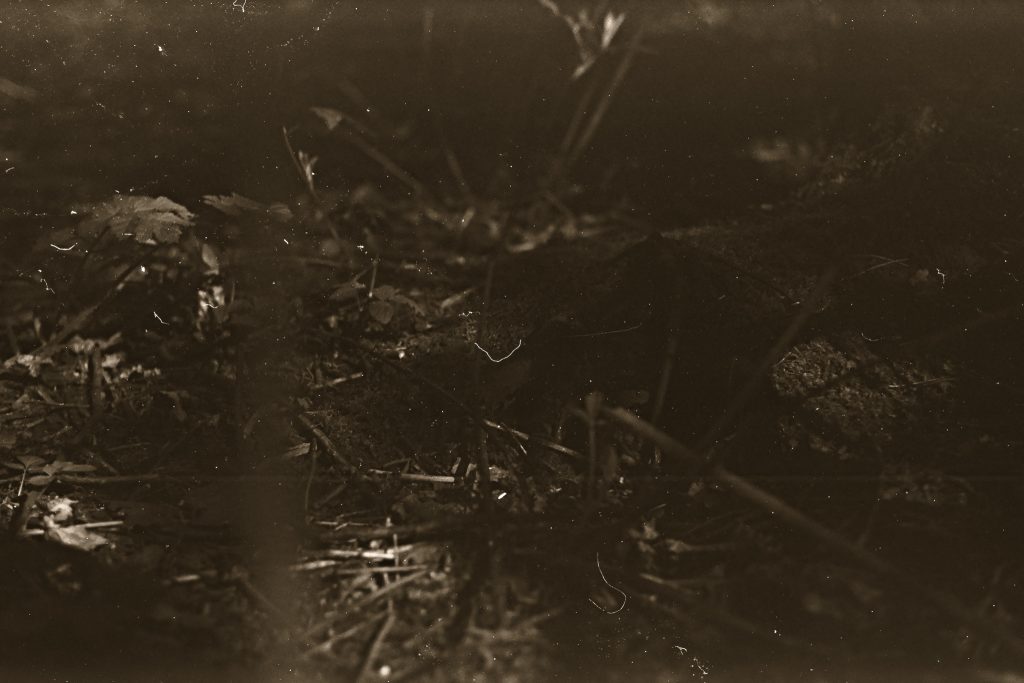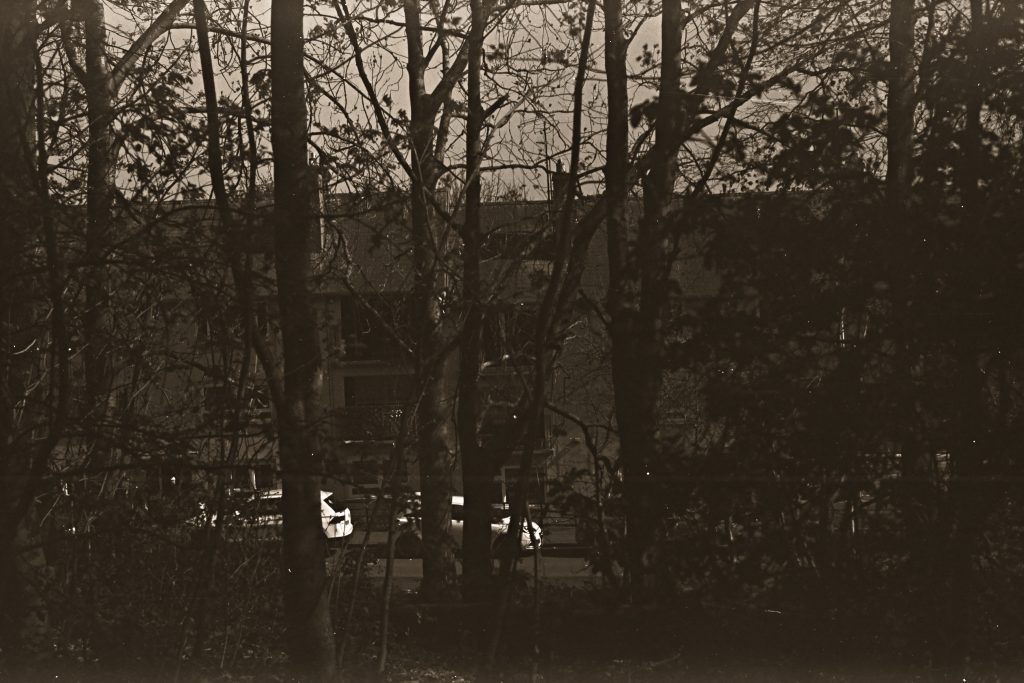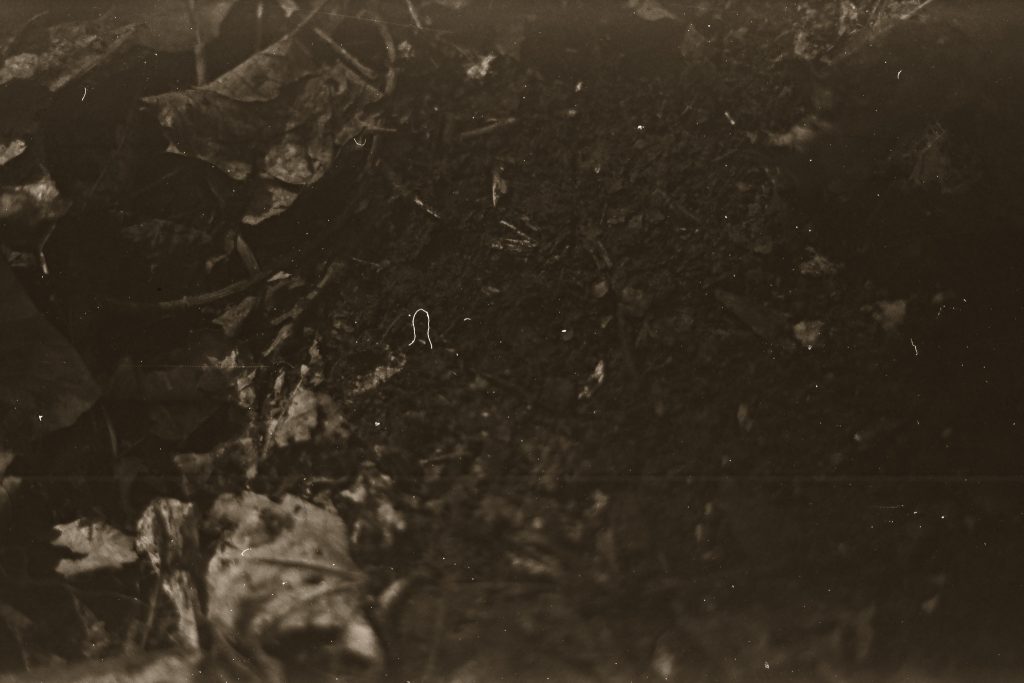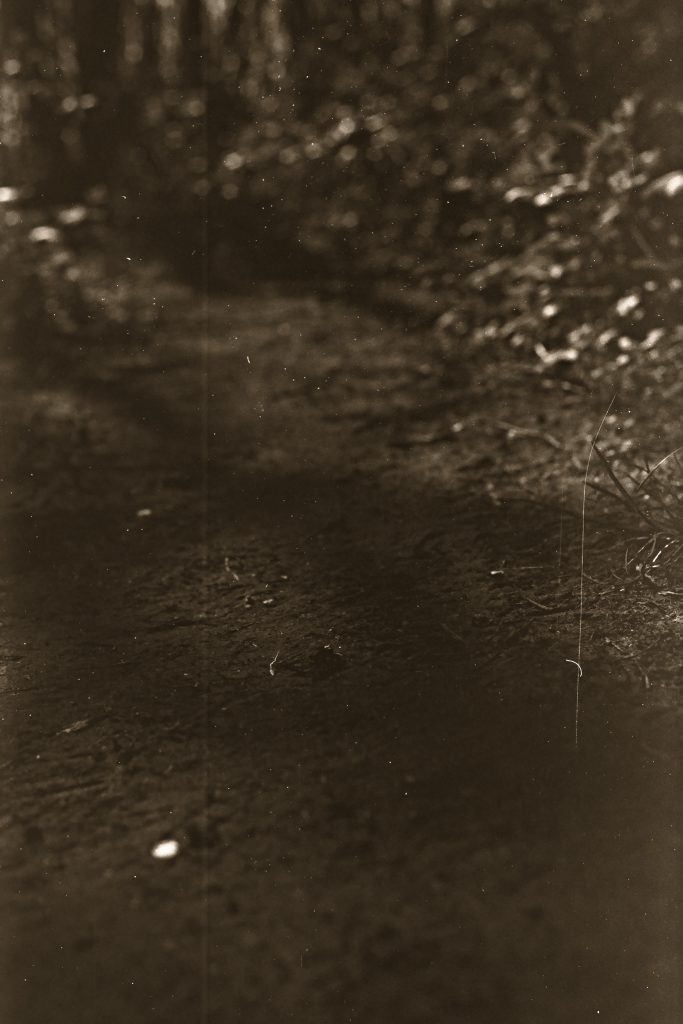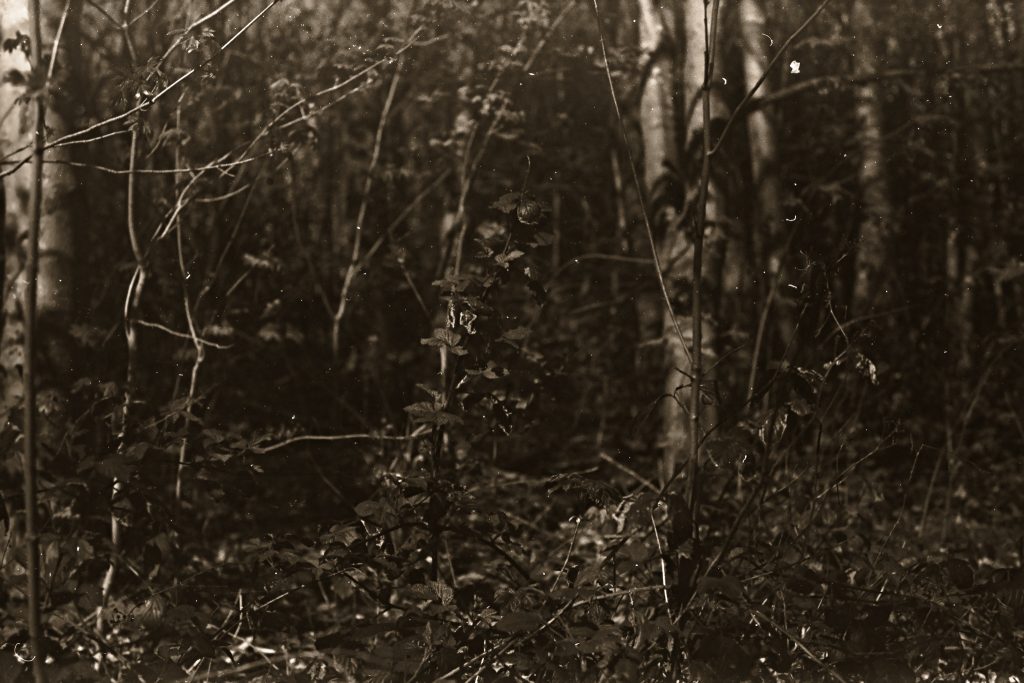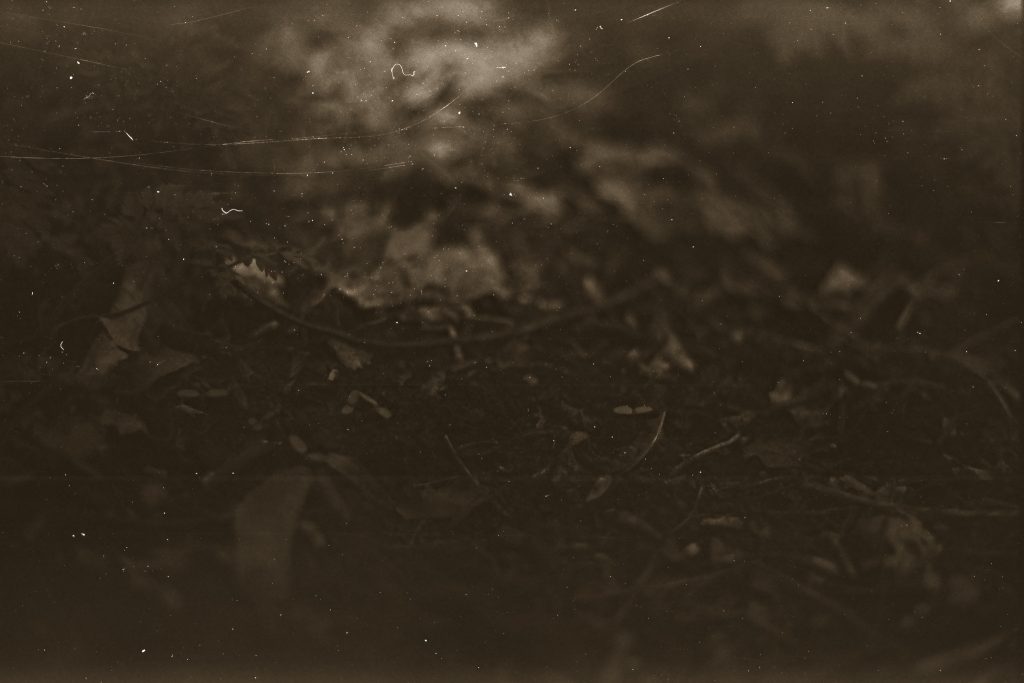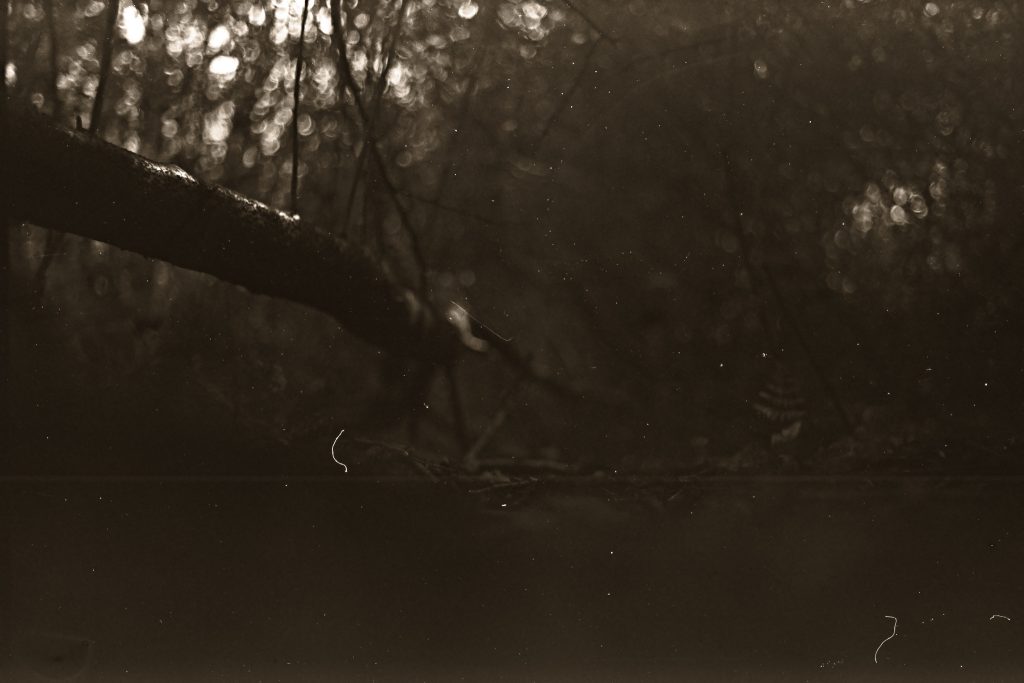
This set of photographs is a response to Stuart Hall’s notion of the “living archive” (Hall, 2001). It began with two questions: What constitutes an archive? And in what ways can we understand “soil as archive” (Sekuli, Tomic and Sattler, 2020: 20).
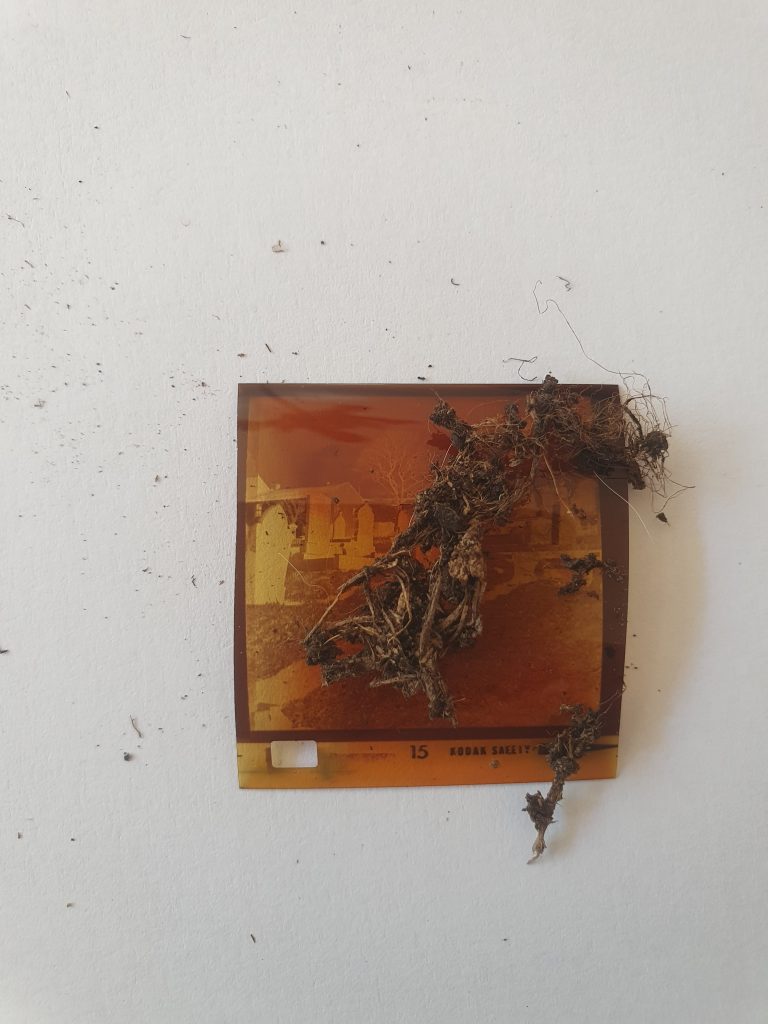
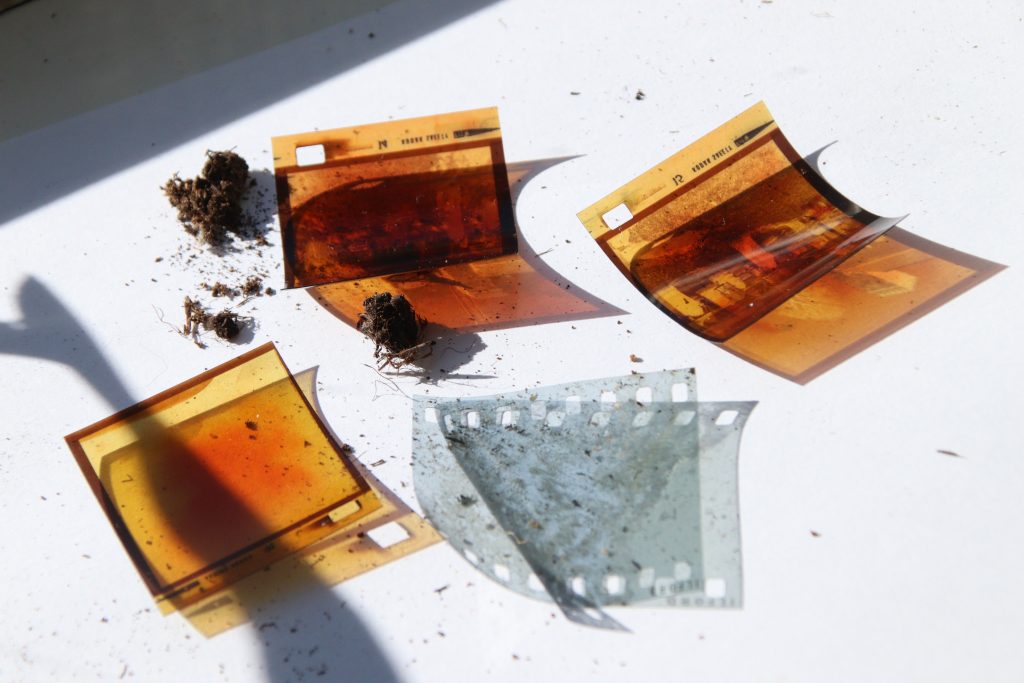
I began by digging out my own archive, discovering blank developed negatives. I buried some and covered others in soil, leaving them on the windowsill for 2 months, inspired by Knowles’ (2017) analysis of Lefrant’s buried film work and her call for “earthly” and “new aesthetic materialism” (Knowles, 2017: 258).
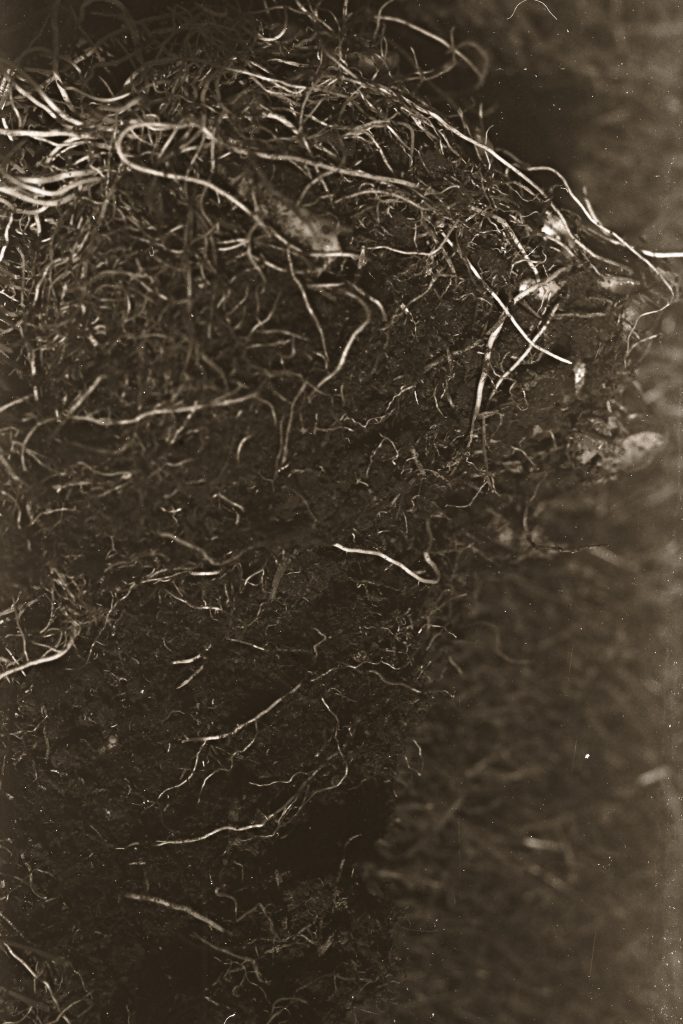
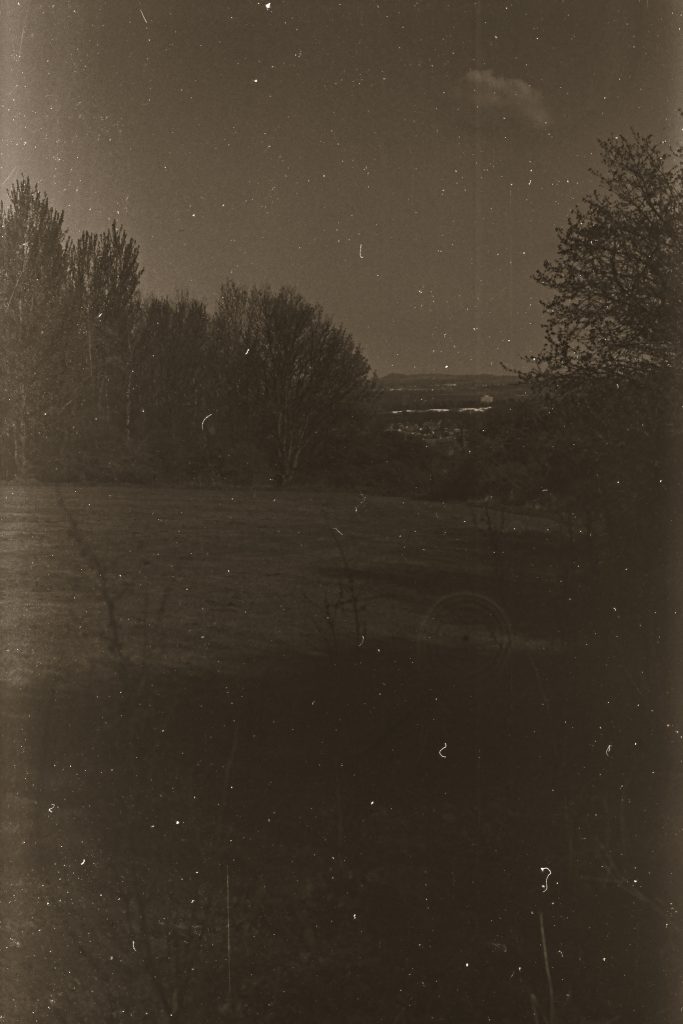
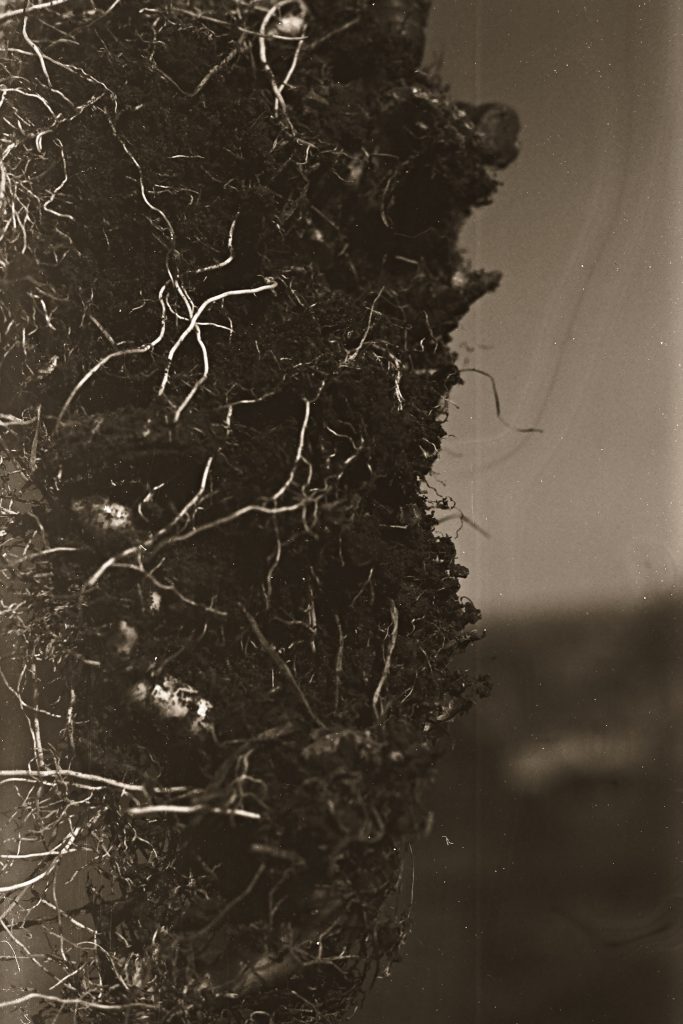
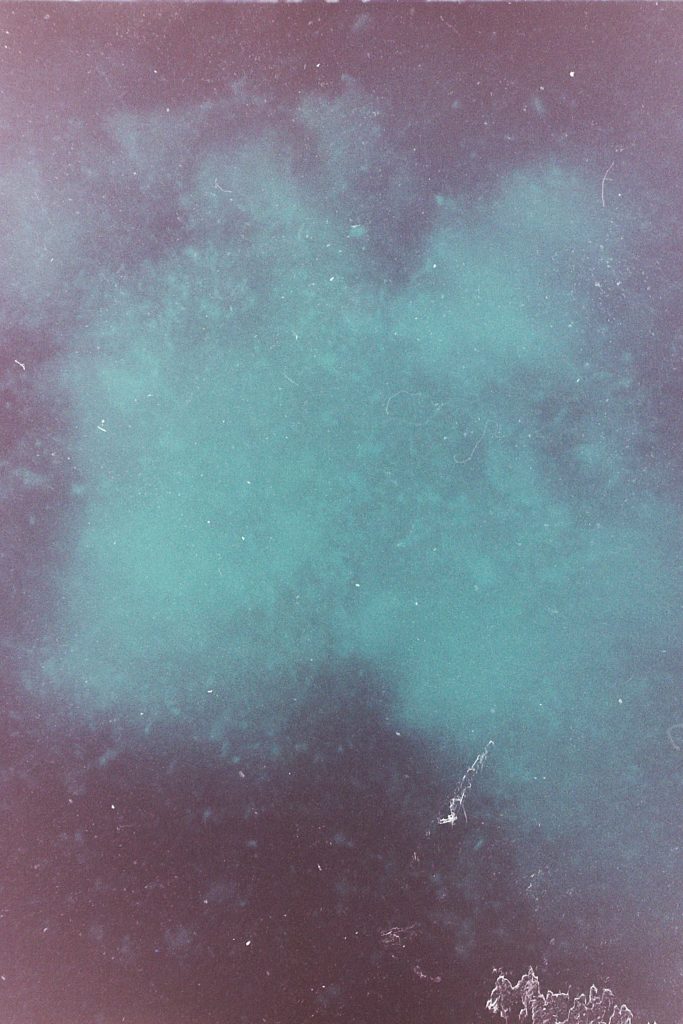
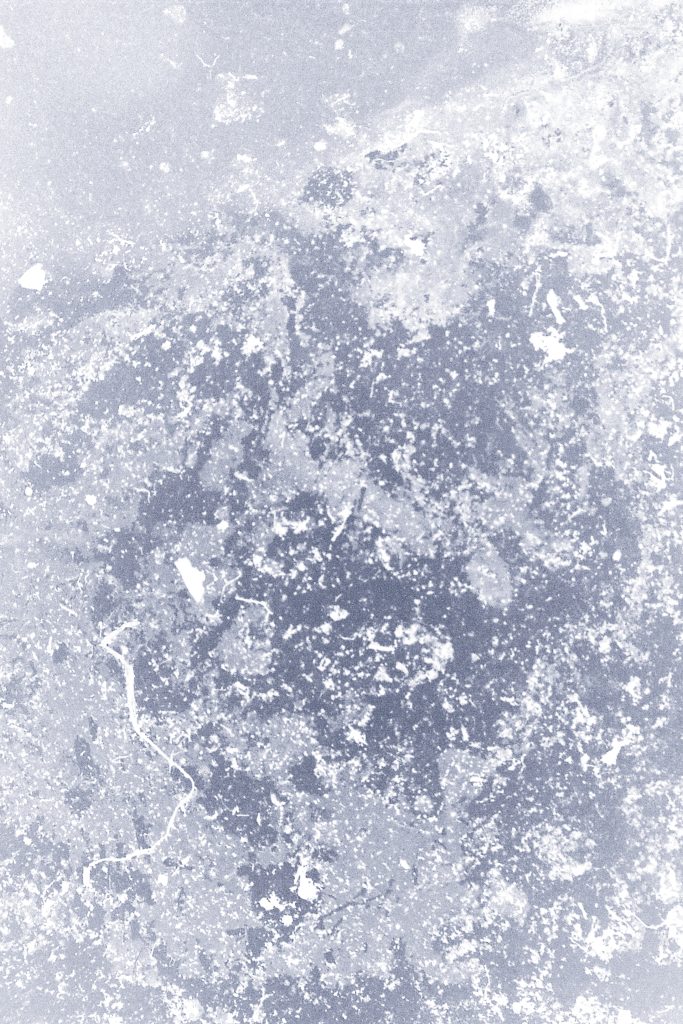
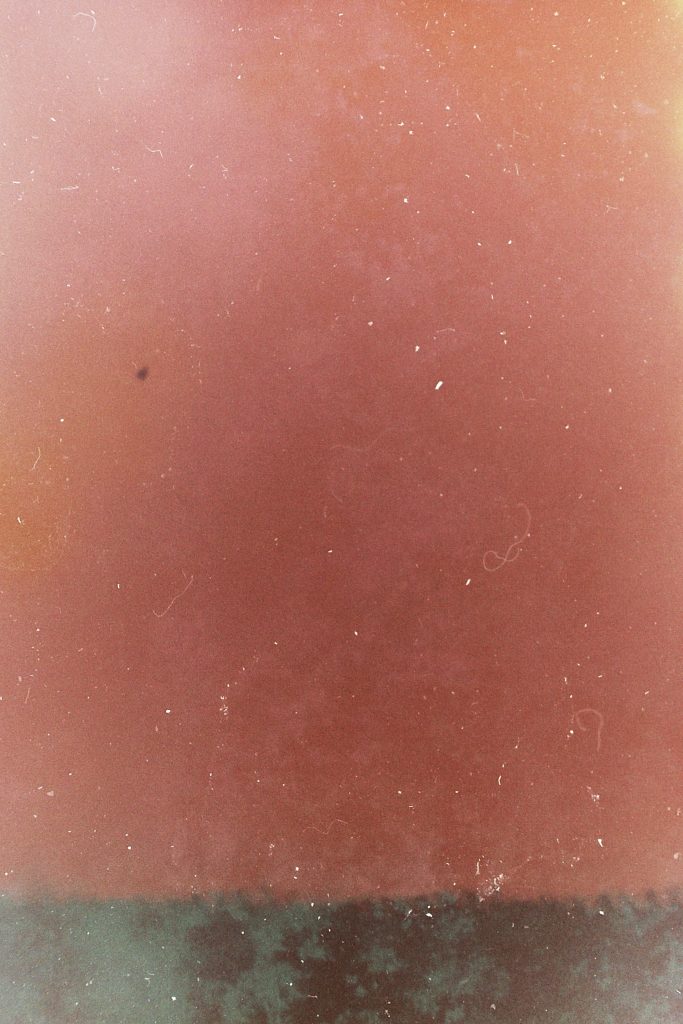
Photographs of the soil of Meadowfield Park and Woodland, developed with a moss based solution using sustainable dark room practice. I was struck that my research brought up practically no footage or photographs of Meadowfield Park – a public park/woodland next to a 1950s council estate sandwiched between the Royal owned Holyrood Park and the more wealthy area of Duddingston. I imagine this lack of documentation is due to the working class area being overshadowed by its neighbours. The photographs act as an example of how we “co-create place” (Benyus, 2023), being co-created with soil, moss, the camera, my body and this place. They remind me of Springaay et al’s (2020) thought on radical archive co-creation, and whether considering soil as living archive is a way of acknowledging our co-creation with the living world.